> For the complete documentation index, see [llms.txt](https://docs.tradefi.bot/whitepaper/llms.txt). Markdown versions of documentation pages are available by appending `.md` to page URLs; this page is available as [Markdown](https://docs.tradefi.bot/whitepaper/ai-tradingview-indicators/reversal-zones-or-ai-powered-tradingview-indicator/how-to-use-it.md).
# How to use it?
{% hint style="success" %}
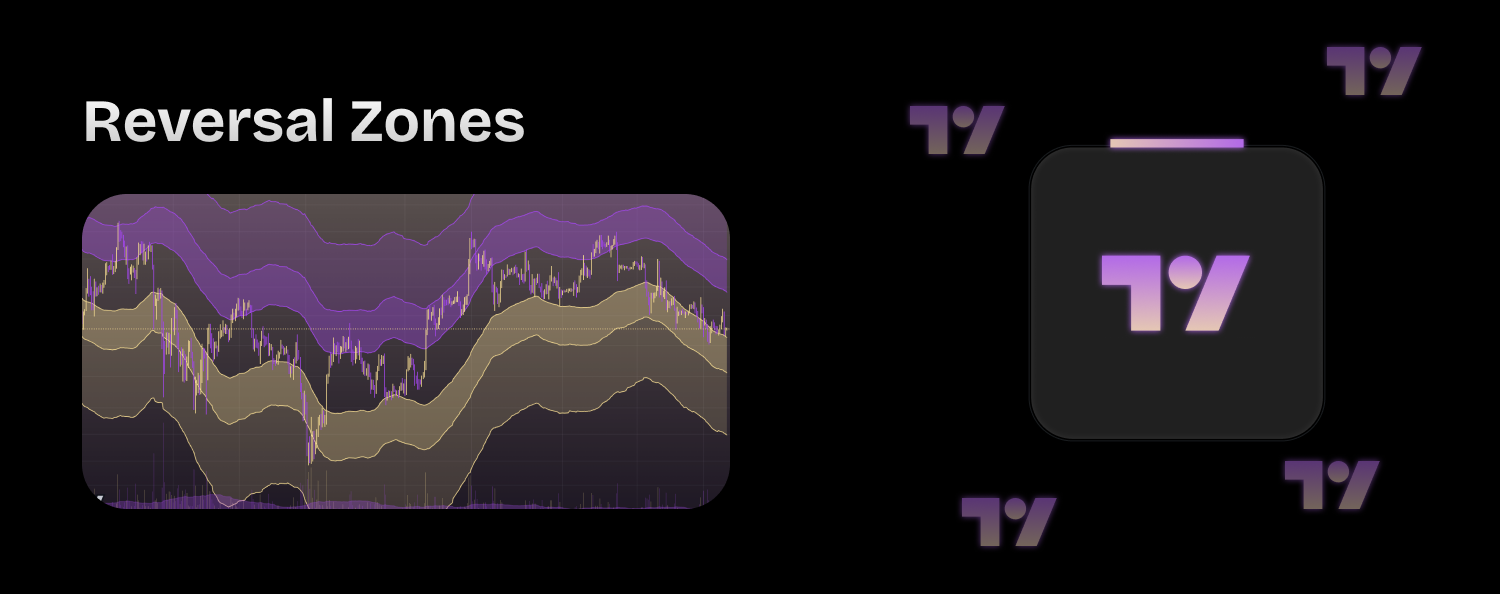
The "Tradefi.bot | Reversal Zones" indicator is an advanced tool on TradingView that allows traders to identify potential price reversal zones based on volatility and moving averages. This chapter provides a detailed guide on how to use this indicator to maximize its effectiveness in trading decision-making.
{% endhint %}
## Installing the Indicator
**Adding the Indicator:**
* Open your chart on TradingView.
* Click on the "Indicators" icon and search under "Invite-only script."
* Select the indicator to add it to your chart.
## Indicator Configuration
Once the indicator is on your chart, you can customize it according to your needs:
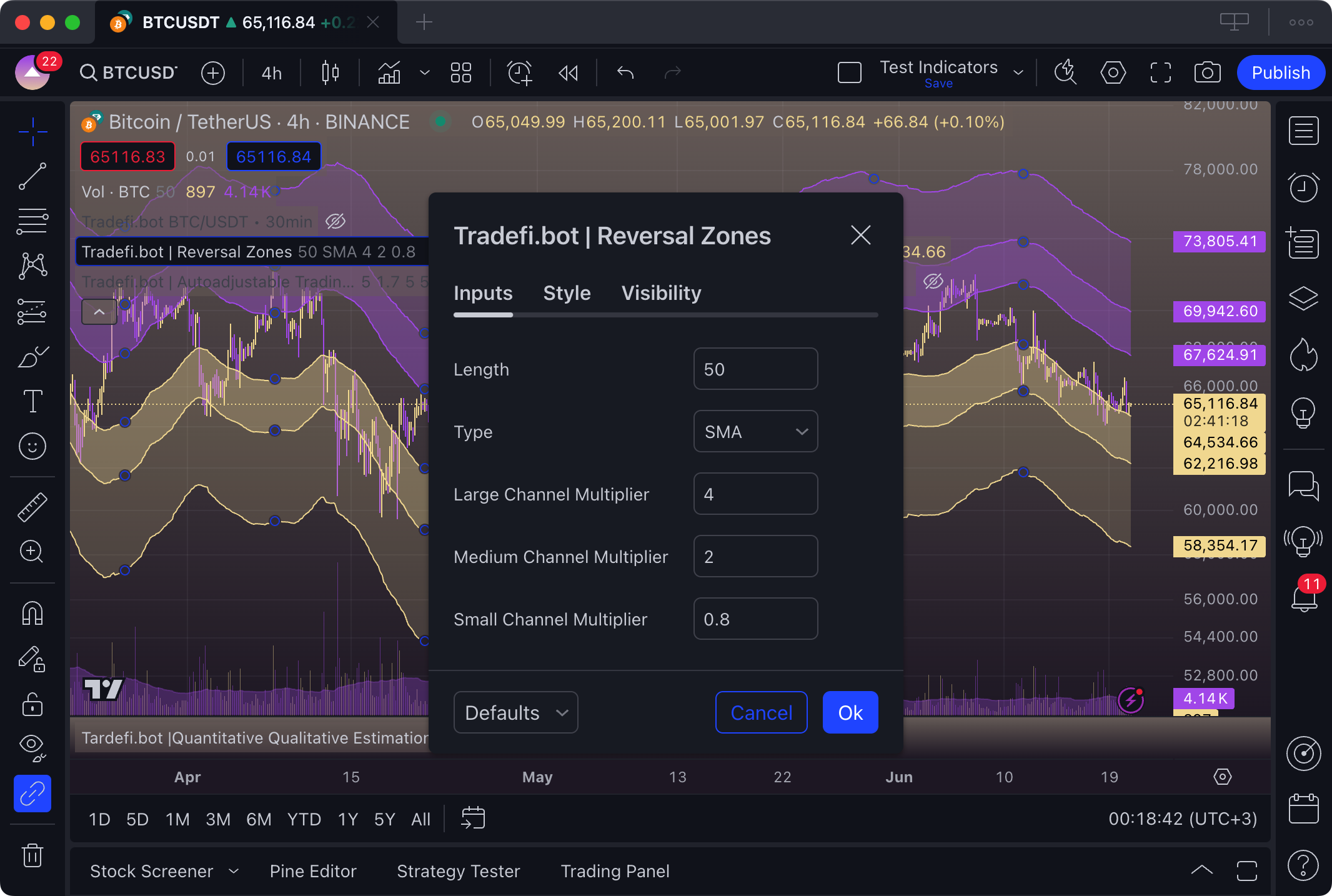
1. **Selecting the Moving Average**: Choose between SMA, EMA, or HMA based on your sensitivity preference and response to price changes.
2. **Adjusting Channel Multipliers**: Configure multipliers for large, medium, and small channels, which will determine the width of reversal zones based on market volatility.
3. **Temporal Adjustment**: If trading on different timeframes, adjust the indicator parameters to align with expected volatility on each timeframe.
## Interpreting Signals
Effectively using "Tradefi.bot | Reversal Zones" involves proper interpretation of the reversal zones identified by the indicator:
1. **Identifying Reversal Zones**: The upper and lower lines of the channel represent potential overbought and oversold zones, respectively. When the price reaches these zones, it could indicate an upcoming reversal.
2. **Confirmation of Reversal**: Look for additional confirmation through candlestick patterns, other technical indicators, or volume changes to validate reversal signals.
3. **Entry and Exit Points**: Use price intersections with the channels as potential points to open or close positions. Intersections with the upper channel may be sell signals, while intersections with the lower channel may be buy signals.
4. **Risk Management**: Set fair stop losses outside reversal zones or at previously identified key support/resistance levels.
## Advanced Strategies
For more experienced traders, combining "Tradefi.bot | Reversal Zones" with other tools and strategies can significantly enhance signal accuracy:
1. **Combining with Momentum Indicators**: Use RSI or MACD to confirm the strength of potential movement before acting on indicator signals.
2. **Multiple Timeframe Analysis**: Review signals on various timeframes to ensure signal consistency across short, medium, and long-term.
3. **Wave Theory and Price Patterns**: Integrate theories like Elliott Waves or price patterns like triangles and head and shoulders to predict possible reversal points more accurately.
> Using "Tradefi.bot | Reversal Zones" requires understanding and practice, but when properly integrated with a coherent trading strategy and solid risk management, it can become a valuable tool for anticipating and acting on market dynamics. This chapter should serve as a foundation for exploring and maximizing the potential of this indicator in your trading.