> For the complete documentation index, see [llms.txt](https://docs.tradefi.bot/whitepaper/llms.txt). Markdown versions of documentation pages are available by appending `.md` to page URLs; this page is available as [Markdown](https://docs.tradefi.bot/whitepaper/ai-trading-agents-bots/al-ai-agent-ranger-reversor-v1-or-tradefi.bot-eth-usdt-45m/iii.-strategy-logic-and-interpretation.md).
# III. Strategy Logic & Interpretation
The **AL/AI Agent Ranger Reversor v1** is powered by a unique multi-layered logic architecture that adapts to volatility, direction, and time. Instead of using fixed rules, the agent observes the market's rhythm and makes decisions based on confirmation, trend dynamics, and internal safety limits.
This section explains how the bot "thinks" and why its decisions are precise — without exposing the underlying code or proprietary logic.
***
### 📐 1. Adaptive Range Engine
The agent uses a dynamic, real-time filter that calculates a custom price corridor. This "range map" helps the agent understand when the market is consolidating, breaking out, or shifting direction.
Unlike traditional indicators, this filter is adaptive — constantly updating based on momentum and volatility.
***
### 📈 2. Trend Confirmation System
Before entering a trade, the agent waits for alignment between market direction and internal confirmation logic.
It doesn't react to every candle — only when structure and intent are clear.
This makes the bot less reactive to noise and more aligned with meaningful trends.
***
### 🎯 3. Entry Criteria
The bot takes trades only when the system confirms:
* A directional breakout is occurring
* The market structure supports continuation
* Optional trend alignment via a long-term filter (like EMA)
This prevents false starts and helps the bot "wait for the moment."
***
### 🔁 4. Auto-Reversal Execution
If the market reverses mid-trade and the opposite signal is confirmed, the agent immediately:
* Closes the current position
* Enters a new position in the opposite direction
This allows it to follow momentum shifts without delay.
***
### 🧠 5. Trailing Exit Mechanism
Once in profit, the agent activates a trailing protection system that locks in gains while allowing room for growth. This is fully dynamic and adapts to each market condition — no fixed take profit.
***
### ⏱ 6. Time-Based Exit
Every trade has an expiration window.\
If a trade remains open too long (beyond a configurable limit), the agent will close it automatically — regardless of profit or loss.
This keeps the strategy agile and responsive.
***
### ✅ 7. Profit Target Logic
If the trade hits a minimum profit threshold before the trail or time limit is triggered, the agent will secure gains and exit.
This prevents holding winning positions for too long and protects equity growth.
***
### 📏 8. Trend Filter
When enabled, this layer filters trades based on the broader market bias:
* Longs only in bullish conditions
* Shorts only in bearish trends
This reduces overtrading in sideways environments.
***
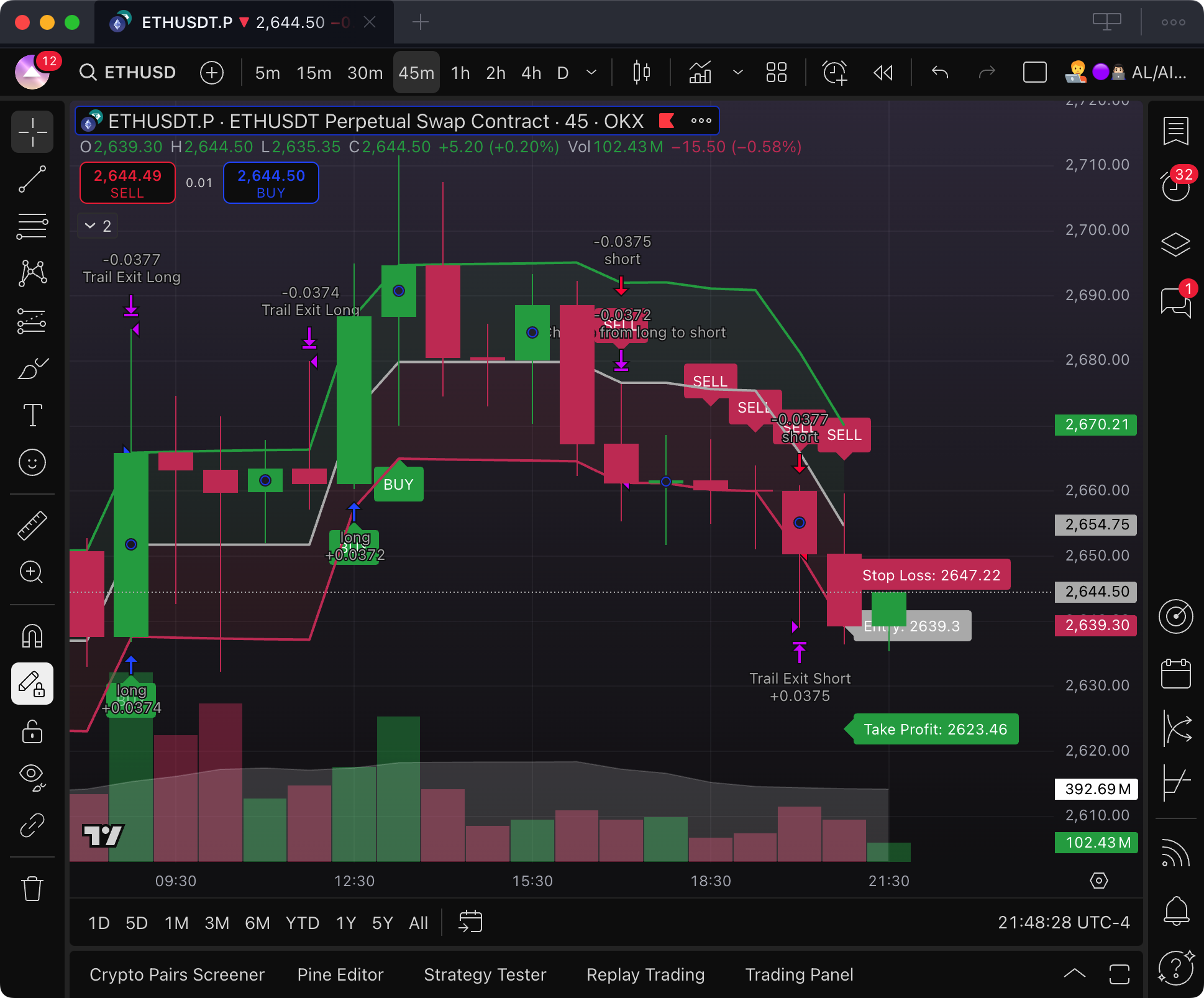
### 🖼️ 9. Visual Guidance
On the chart, the agent gives full visual feedback:
* Real entry level + live P/L tracking
* Projected Take Profit and Stop Loss zones
* Dynamic price channel to show profit and risk areas
* Optional trend line for broader context
* All zones are color-coded and minimalistic
> 💡 Designed like a cockpit: the visuals guide you, not distract you.
***
### 🧪 How It Thinks
1. Is this a legit directional move?
2. Are internal filters aligned with price behavior?
3. Should I enter now or wait?
4. Should I hold, reverse, or exit?
5. Am I synced with trend and structure?
Only when logic confirms alignment, the bot acts.
***